
What’s a piece of technology you’re convinced will exist in 20 years?
If you had asked someone 30 years ago if we’d wear tiny computers on our wrists that could monitor our heart rate, detect falls, perform an ECG, and call for help in an emergency, they probably would have laughed.
Yet here we are.
It all started with simple pedometers that counted our steps. Then came fitness trackers like Fitbit, followed by smartwatches such as the Apple Watch that added heart monitoring, ECGs, blood oxygen tracking, sleep analysis, and emergency alerts.
Today, wearable technology continues to evolve. Devices like the Oura Ring monitor sleep quality, body temperature, heart rate variability, and recovery, while newer AI-powered wearables such as Hume are beginning to interpret how our bodies respond throughout the day.
Every generation of health technology gets a little smarter.
So what comes next?
I believe that within the next 20 years, we’ll have something I call a Personal Health Guardian.
Imagine wearing a small device—or perhaps no visible device at all—that continuously monitors hundreds of health markers in real time.
Instead of simply counting your steps or measuring your heart rate, it could notice tiny changes that even you can’t feel.
It might tell you:
“You’re becoming dehydrated. Drink water now.”
“Your stress levels have been elevated for several days. Consider taking a walk or practicing deep breathing.”
“Your sleep quality has declined this week. An earlier bedtime may improve your recovery.”
Or even more importantly:
“Your body is showing early signs of an infection. It would be wise to contact your healthcare provider today.”
Imagine detecting illnesses days—or even weeks—before symptoms appear.
For people living with arthritis, diabetes, heart disease, autoimmune conditions, or other chronic illnesses, this kind of technology could be life-changing. Instead of reacting after a flare-up or health crisis, we could intervene earlier, potentially reducing pain, preventing complications, and improving outcomes.
As someone who not just lives with Arthritis, but volunteers for an organization affiliated with Arthritis
I know how valuable it would be to catch subtle changes before inflammation spirals into a painful flare. Technology like this could help people stay active, maintain independence, and make more informed decisions about their health.
Could it also help doctors? Absolutely.
Instead of relying on a few minutes during an office visit, healthcare providers could review trends over weeks or months, making diagnoses more accurate and treatments more personalized.
Of course, privacy and security would need to be a top priority. Our health information is deeply personal, and any future technology must give people full control over their own data.
Will a Personal Health Guardian replace doctors?
No.
You see I personally believe that things like AI robotic assisted devices that already exist in helping surgeons and surgery be more precise, create knees, and ankle bones that are precisely custom fit. I think AI and robotics have a way to remain in our life without replacing that human contact that we all need so very much nothing should ever replace a human being..
But I think tools like that would be able to assist doctors in helping us make the most of our 10 minutes in his office.
I believe it will become one of the most valuable partners in preventive healthcare, working quietly in the background, helping us recognize problems sooner, make healthier choices, and live longer, healthier lives.
This piece of technology will not only monitor your health if you happen to fall or get in an accident or become unable to speak such as if you’re having a stroke or heart attack or whatever episode it may be or if you’re getting attacked by an intruder, etc. it will contact the proper authorities such as 911 police ambulance and although this device is meant to prevent illness, we are human and emergencies do arise, and so this would be all things in one device.
We’ve gone from pedometers… to Fitbits… to smartwatches… to smart rings… and now to AI-powered health wearables.
The next giant leap won’t just be tracking our health.
It will be helping to protect it.
What do you think? What piece of technology are you convinced will exist in the next 20 years? I’d love to hear your predictions.
You see we’ve come to a era in our life where we are tired of being treated for a disease when we could have optimal wellness to help prevent disease all these medications today do is treat conditions that we already have most of us would like to live a slightly longer and healthier life, maybe not forever, but at least have awareness so we could make good changes.
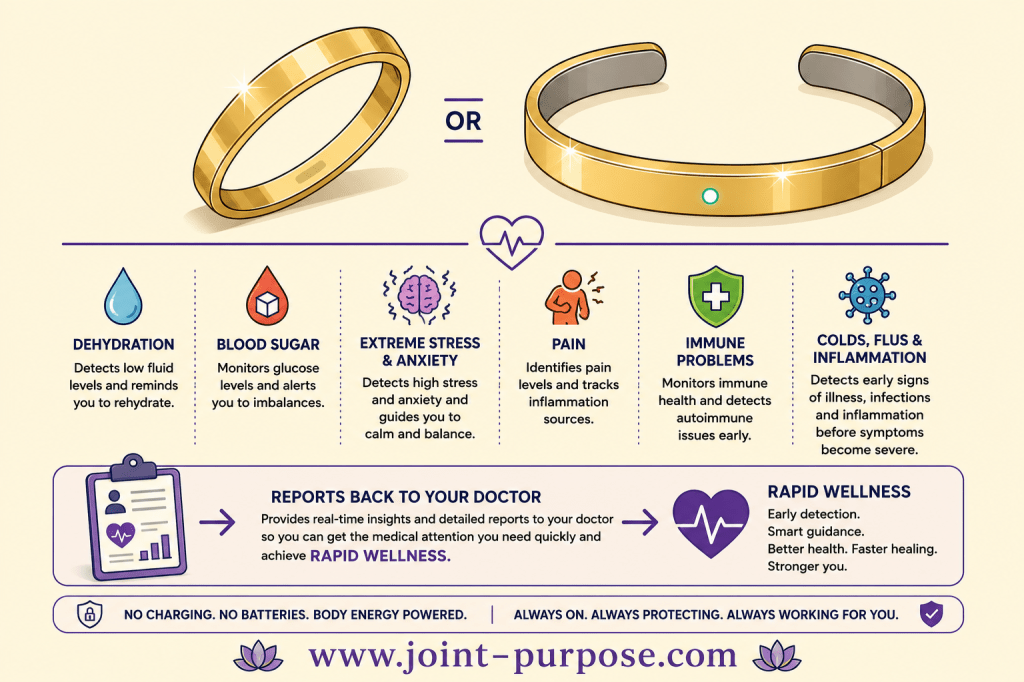
My AI generated image version of my personal health guardian of the future


You must be logged in to post a comment.