
What’s a chapter of your life you’d title “The Hard Years” — and what got you through it?
The Hard Years
If I had to name one chapter of my life, it would be called The Hard Years.
There were several difficult seasons in my life, but nothing compares to the ten years I spent trapped in an abusive marriage. Looking back now, it felt less like a marriage and more like living in my own prison.
Every day was unpredictable. I never knew what would trigger the next explosion. It could be something I said, something I cooked for dinner, the miles on my car, or simply speaking to another person. The rules constantly changed, and no matter what I did, I was somehow always wrong.
The abuse wasn’t just verbal. It was physical, emotional, financial, and sexual. I was punched, slapped, kicked, shoved, and terrorized. While pregnant, I was pushed from a moving vehicle. Another time I was thrown so hard my head went through a glass door, requiring more than 150 stitches.
The physical injuries healed far faster than the emotional ones.
I was diagnosed with PTSD and anxiety.
The hardest part was being a mother. I was so afraid that my daughter would witness the violence or that he would throw me out of the house as he did before and keep her from me as he tried before that I made the heartbreaking decision for her to live with my parents for several years. I saw her every day, but it wasn’t the childhood I wanted for either of us. I truly believed I was protecting her. Instead, it unintentionally created distance between us, something I have carried with me ever since.
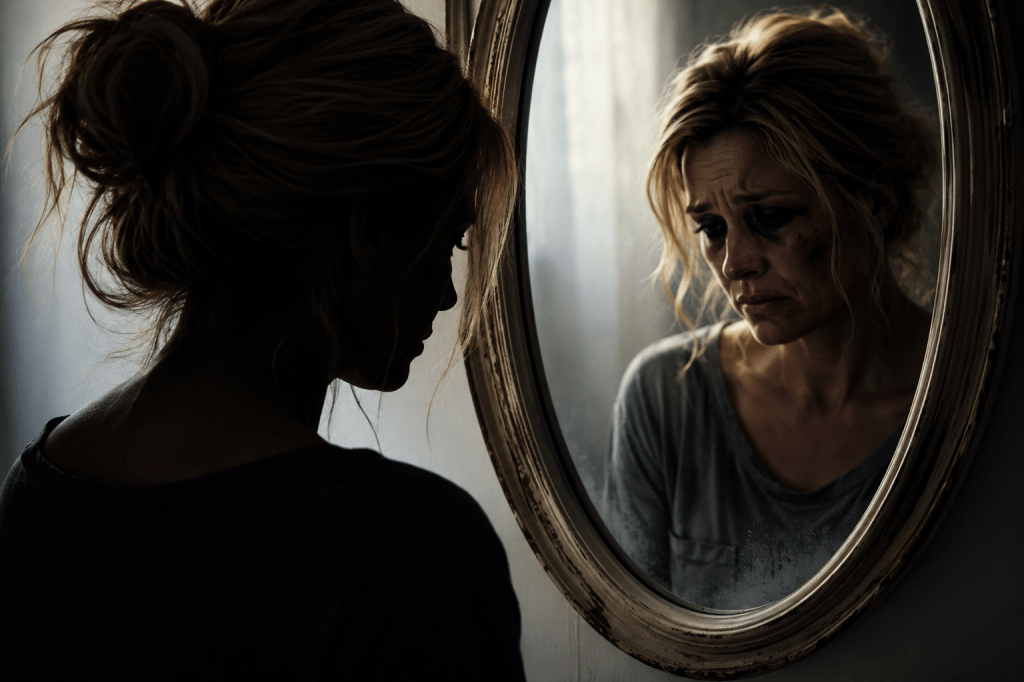
By the end of those ten years, I barely recognized the person staring back at me in the mirror. Abuse has a way of stripping away your confidence until you begin believing you deserve what is happening.
You don’t.
You believe you are not worthy.
You believe no one else will ever love you.
Leaving was the hardest thing I have ever done. You would think it was easy.
It wasn’t. Each time I left came with consequences and retaliation.
It took planning, courage, and every ounce of strength I had left. Even after the divorce, the abuse didn’t immediately stop. It wasn’t until I filed a civil lawsuit for my medical expenses that he finally backed off. I wasn’t trying to become wealthy. I simply wanted him to understand that every act of violence had consequences.
That chapter finally ended 4 years after I left for good in 1988 he finally left me alone by 1992.
Healing, however, was just beginning.
I began counseling in 1987, I would sneak there because my mileage was always checked or I’d use my dad’s car to go. Counseling helped me rebuild the person I had lost. Then something unexpected happened in 1989 I began volunteering at a domestic violence shelter. That volunteer work became a career. I eventually became a shelter manager and spent more than ten years helping survivors find safety, hope, and a new beginning. I ran their support group, I spoke in prisons for women, police stations. I spoke in Columbus Ohio to help get laws changed. It was very empowering.
I sat beside women while they filed for restraining orders. I listened to their stories. I cried with them, encouraged them, and reminded them they weren’t alone because I had once been where they were.
While I believe restraining orders can be an important legal tool, I also believe we need stronger domestic violence laws and more consistent enforcement to better protect victims before tragedy strikes.
One of the most painful moments during that time didn’t come from my abuser. It came from my own church.
As a Catholic at the time, I was told I should simply pray for my marriage instead of leaving it.
For a while, I turned away from the Catholic Church because I couldn’t reconcile that advice with the reality I was living.
Later, I found another church in Austintown, Ohio, A non denominational church where a pastor told me something I’ll never forget:
“God never intended for you to stay where you’re being abused. Save your money. Make a plan. You are worthy of better, God doesn’t want you to be abused. Get yourself out.”
Those words gave me permission to stop feeling guilty and start fighting for my life.
Eventually, after more than a decade working in domestic violence, I realized I was carrying everyone else’s pain along with my own. Burnout is real, especially when you’ve lived the experience yourself. So I chose a different career path.
Today, I don’t share this story because I want sympathy.
I share it because somewhere, someone may be living their own version of The Hard Years.
If that’s you, please hear me:
Abuse is never your fault. It will get worse.
You are not weak because you stayed. Leaving is often the most dangerous time for a victim, and only you know when it is safe.
Make a plan. Save what you can. Tell someone you trust. Reach out to a domestic violence organization. There are people who will help you.
Most importantly, know this:
The hardest years of your life do not have to define the rest of your life.
Mine didn’t.
And that’s why this chapter ends not with defeat—but with survival, healing, and hope.


You must be logged in to post a comment.