
What’s a piece of technology you’re convinced will exist in 20 years?
Looking 20–30 Years Into the Future: Two Inventions That Could Change Everyday Life
When people imagine the future, they often think of flying cars, robots, and artificial intelligence.
I think some of the most important inventions will focus on health, clean water, energy efficiency, and adapting to extreme weather.
I also believe we should protect more forests, wetlands, and natural land instead of continually replacing them with concrete, asphalt, and new construction. We could restore existing buildings and communities or tear down structures that are unsafe and rebuild in the same developed areas. This would reduce unnecessary land clearing while allowing older neighborhoods to become safer, cleaner, and more desirable places for people of all income levels.
Two inventions I would like to see within the next 20 to 30 years are Atmospheric Water Windows and Personal Climate Bubbles.
Atmospheric Water Windows
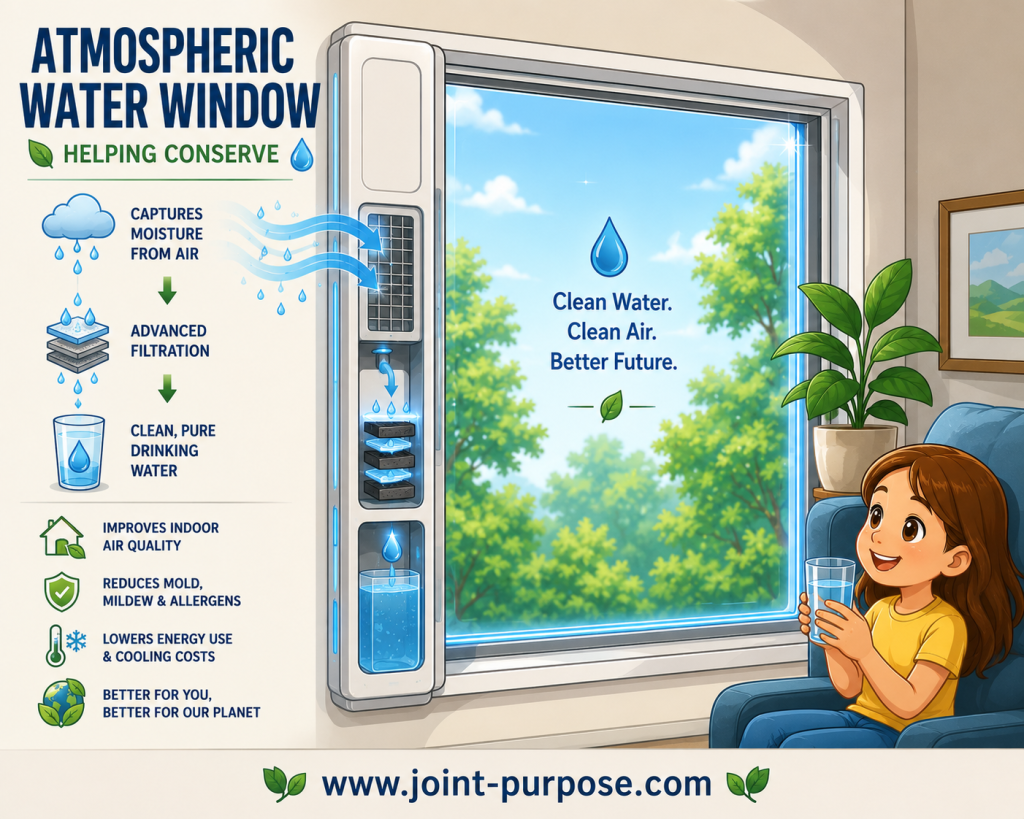
Atmospheric Water Windows would collect moisture from humid air, filter it, and turn it into clean drinking water.
In humid climates, a home could potentially produce several gallons of water each day.
These windows could also remove excess indoor humidity, helping reduce mold, mildew, dust mites, and allergens. They may improve comfort for people with asthma, COPD, allergies, heart disease, and other conditions affected by heat and humidity.
By lowering indoor humidity, they could also reduce the energy needed to cool a home.
A future window may not simply provide light and a view. It could produce water, improve air quality, and help regulate the indoor climate.
Personal Climate Bubbles

A Personal Climate Bubble would create a small, invisible, temperature-controlled area around the body.
On a 95-degree day, the air around you might feel closer to 75 degrees. During winter, the same technology could gently warm the space around your body.
The system could be controlled by a thin ring or wristband powered by body heat, movement, or another future energy source.
This technology could help people with asthma, COPD, heart disease, cancer, multiple sclerosis, arthritis, heat sensitivity, and cold intolerance.
It could also protect children, older adults, outdoor workers, first responders, and anyone exposed to dangerous temperatures.
A Connected Health Future
These inventions could eventually work with a Personal Health Guardian.
Your wearable could detect dehydration, breathing changes, stress, or rising body temperature. Your climate bubble could automatically adjust, while your windows provide filtered water and maintain healthier indoor humidity.
The technology would not replace doctors. It would provide earlier warnings, reduce environmental stress, and help people respond before a problem becomes serious.
Twenty or thirty years ago, many of today’s devices would have seemed impossible.
The next major inventions may not simply make life more convenient.
They may make our homes healthier, our environment more sustainable, and our bodies better protected.
Peace ☮️
Deb


You must be logged in to post a comment.