
So a couple days ago , I talked about knowing your worth and recognizing that love should never require you to live in fear. Today, I want to go deeper.
We need to talk about the cycle of violence, what happens behind closed doors, what it takes to leave. And why we need to stop asking why she stayed and start asking why he abused. Abuse often starts small: control, criticism, jealousy disguised as love.
Then comes the incident, and after that, the honeymoon phase: flowers, I love you, I’ll change. That cycle keeps people hoping. And meanwhile, to the outside world, he can look perfectly charming.
People say, “He seems so nice.” You don’t know what happens when the door closes.
That’s why we don’t judge. We support. If you’re preparing to leave, do it as safely as possible.
Think about a plan before you announce anything. If you can do it safely and lawfully, set aside emergency funds and essential documents. Plan a safe destination.
Be cautious with technology. Don’t try to physically force an abuser from a home yourself. Use legal channels and professional help.
Build a trusted network and let the responsibility stay where it belongs: on the abuser. When someone finds the moment to leave, don’t stand there asking why it took so long.
Stand beside them.
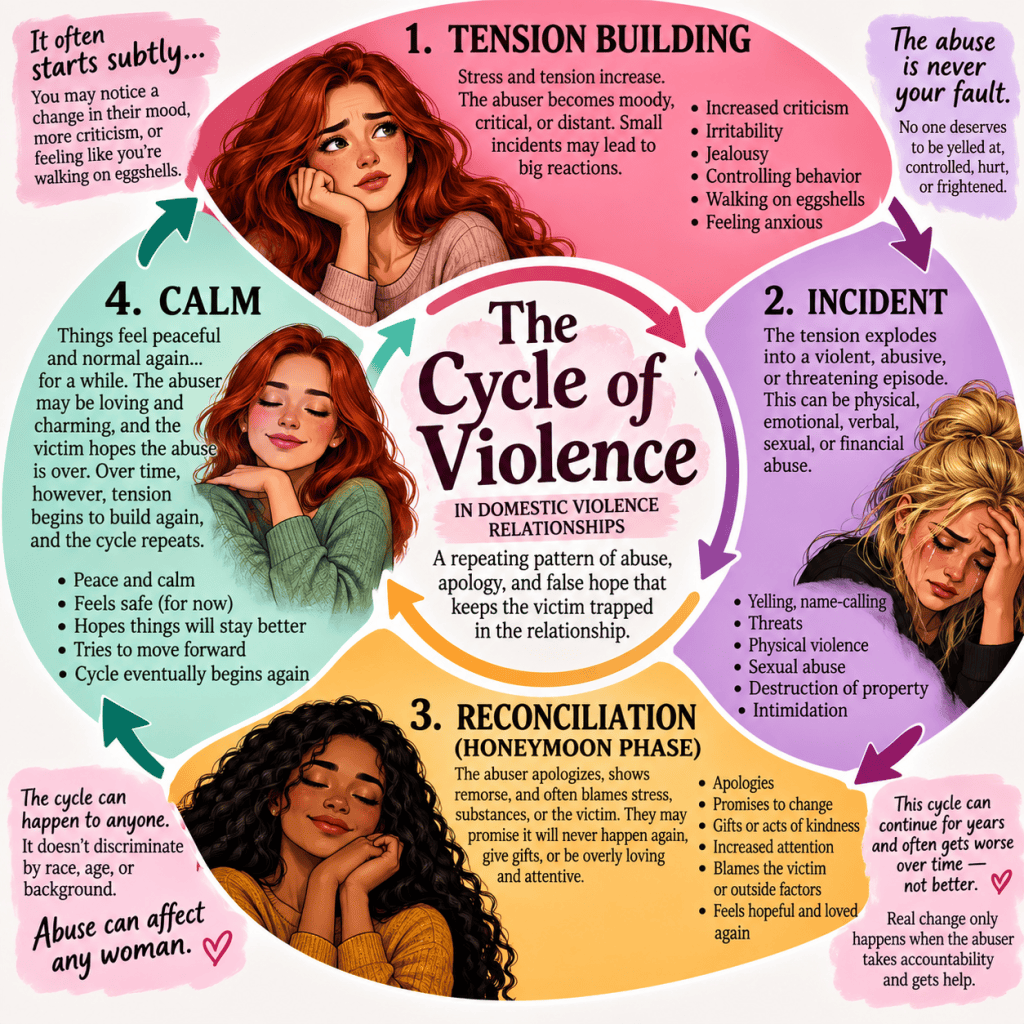
The Four Phases of the Cycle of Violence
1. Tension Building:
The atmosphere begins to change. Criticism, jealousy, anger, controlling behavior, intimidation, or threats may increase. The person being abused may find herself constantly watching what she says and does, trying to prevent the next outburst. She begins walking on eggshells in her own home.
2. The Explosion — The Abusive Incident:
The tension erupts. Abuse may be physical, verbal, emotional, sexual, financial, or a combination of these. The abuser uses fear, humiliation, threats, violence, or control to gain power over the victim. The victim did not cause this. The responsibility belongs to the person who chose to abuse.
3. Reconciliation:
Afterward, the abuser may apologize, cry, give gifts, become extremely affectionate, blame stress or other circumstances, or promise, “It will never happen again.” These promises can feel incredibly convincing—especially to someone who desperately wants to believe the person they love will change.
4. Calm — The Honeymoon Phase:
For a while, everything may seem peaceful again. The abuser may become loving, attentive, and reassuring. The victim begins to hope that the nightmare is finally over. But without genuine accountability and sustained change, tension can begin building again—and the cycle starts over.
Why the Cycle Is So Dangerous
Escalation: The cycle may become more frequent or severe over time. The peaceful period can become shorter and, in some abusive relationships, eventually disappear altogether.
Fear, hope, and control: This cycle is one reason we should never stand outside an abusive relationship and ask, “Why didn’t she just leave?” We don’t know what she is facing behind closed doors. She may be terrified, financially controlled, isolated, threatened, stalked, or afraid for her children.
So let’s change the question.
Stop asking: “Why did she stay?”
Start asking: “Why did he abuse her?”
The responsibility for abuse belongs to the abuser, not the person being abused.
If you or someone you know is experiencing domestic violence in the United States, the National Domestic Violence Hotline is available at 1-800-799-SAFE (7233) or by texting START to 88788. If there is immediate danger, call 911.
And if you’re supporting someone who is being abused, don’t begin with judgment. Begin with four words:
“I believe you. I’m here.”


Leave a comment