
Protect your money, your identity, and your peace of mind this holiday season.
November is here, and you know what that means! The holiday shopping season is beginning, Christmas advertisements are everywhere, and our phones are buzzing with deals that seem too good to pass up.
Unfortunately, while we’re busy shopping for gifts, planning family gatherings, and looking for ways to save a few dollars, scammers are busy too!
And believe me, they’re getting pretty creative.
Fraud and scams don’t just happen to people who aren’t paying attention. They happen to intelligent, hardworking, everyday people. Scammers know how to manipulate our emotions, create a sense of urgency, and make something completely fake look legitimate.
That’s why I want to share three simple words this November:
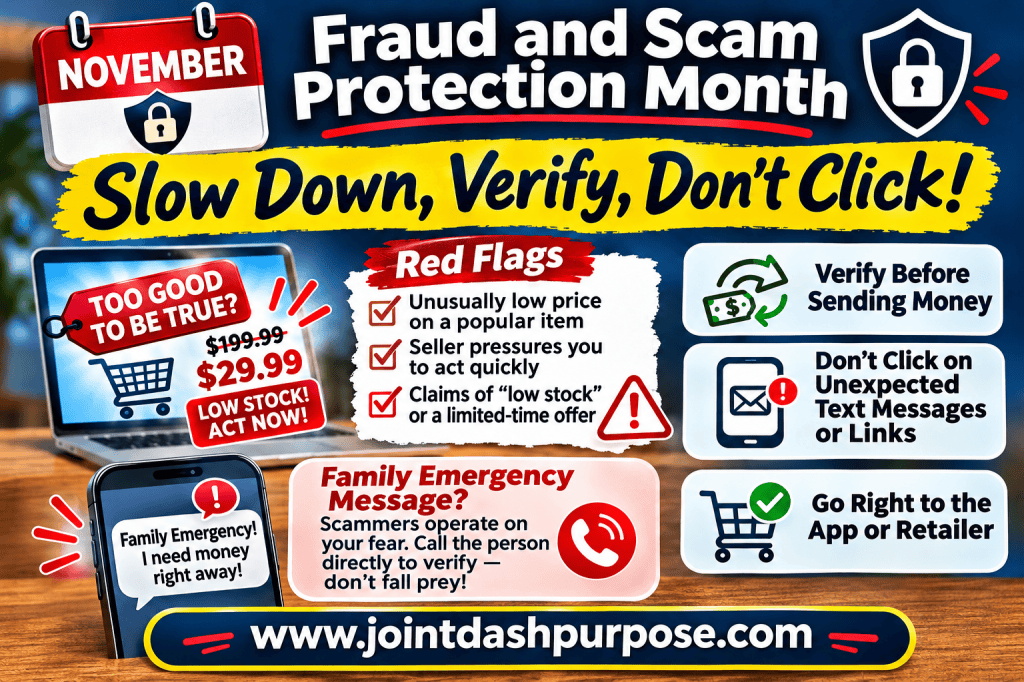
SLOW DOWN. VERIFY. DON’T CLICK!
If It Sounds Too Good to Be True, It Probably Is!
We’ve all seen those advertisements.
A popular item that normally costs $200 is suddenly on sale for $29.99!
Wow! What a bargain!
But wait. There’s a countdown clock ticking away, a flashing message telling you there are only two left in stock, and a warning that the deal expires in five minutes.
Suddenly, you’re feeling pressured to buy something you weren’t even looking for!
That’s exactly what scammers want.
Watch for These Shopping Red Flags
- Unbelievably low prices: Popular merchandise advertised at a fraction of its normal price.
- Pressure to act immediately: Messages saying “Only one left!” or “Offer expires in 10 minutes!”
- Unfamiliar websites: Online stores you’ve never heard of, especially those with suspicious website addresses.
- Unusual payment requests: Sellers insisting on gift cards, cryptocurrency, wire transfers, or payment apps without buyer protection.
- Too-good-to-be-true advertisements: Social media advertisements offering expensive merchandise practically for free.
Now, not every clearance sale is a scam, and legitimate retailers sometimes use countdown clocks. But when several warning signs appear together, it’s time to investigate before spending your money.
Remember, missing a sale is a lot better than losing your money!
Don’t Click That Text Message!
Here’s another popular trick.
You receive a text message that says:
“Your package could not be delivered. Please click here to update your address.”
Or perhaps:
“Your bank account has been temporarily suspended. Verify your information immediately.”
Well, that’s enough to make anyone nervous!
Especially during the holidays when many of us are expecting packages.
But here’s the thing: Scammers send these messages hoping you’ll click before thinking.
That link could lead to a fake website designed to steal your passwords, banking information, or credit card numbers.
What Should You Do?
Don’t click the link!
Instead, open the official retailer’s app or type the company’s website address directly into your browser.
If it’s supposedly your bank contacting you, call the number printed on the back of your debit or credit card.
Never rely on the telephone number or website provided in a suspicious message.
And remember, scammers can make a text message or caller ID appear to come from a legitimate business.
The Family Emergency Scam: When Scammers Use Love and Fear
This one really bothers me because it targets something precious to all of us: our families.
Imagine receiving a frantic telephone call or text message.
“Grandma, it’s me! I’ve been in an accident, and I need money right away!”
Or perhaps someone claims your daughter, grandson, or another family member has been arrested, injured, or stranded somewhere.
They tell you not to call anyone else.
They insist you must send money immediately.
Your heart starts racing, and your first instinct is to help.
That’s exactly what they’re counting on.
Scammers know that fear can make us react before we think.
And today, with artificial intelligence, some criminals can even imitate familiar voices.
Here’s What I Want You to Remember
Before sending a single penny, STOP!
Call your loved one directly using the telephone number you already have saved.
If they don’t answer, contact another trusted family member.
You can even establish a private family code word that everyone knows to use during a genuine emergency.
And please, don’t let anyone pressure you into keeping an emergency secret.
If someone claims your grandchild needs $2,000 immediately but insists you can’t tell their parents, that’s a huge warning sign!
I love my family dearly, but you can bet I’m making a few telephone calls before sending anybody money!
Verify Before You Send Money
Whether you’re shopping online, donating to a charity, helping a friend, or responding to a supposed emergency, take a moment to verify who is receiving your money.
Be especially cautious when someone requests payment through gift cards, cryptocurrency, or transfers that may be difficult to reverse.
Never share a verification code sent to your phone with someone who contacts you unexpectedly.
And don’t assume someone is trustworthy simply because their message appears to come from a familiar name or social media account. Accounts can be hacked or impersonated.
A legitimate emergency doesn’t eliminate your right to ask questions.
What If You’ve Already Been Scammed?
First, please don’t be embarrassed.
Scammers are professionals at deception. Their entire operation is built around convincing people to trust them.
If you believe you’ve been scammed:
- Contact your bank or credit card company immediately. Ask whether the transaction can be stopped or reversed.
- Change compromised passwords and enable multifactor authentication.
- Report the scam to the Federal Trade Commission at ReportFraud.ftc.gov
.
- Report internet-related crimes to the FBI’s Internet Crime Complaint Center at IC3.gov
.
- Warn family and friends so they don’t become victims of the same scam.
The sooner you act, the better your chances of limiting the damage.
Let’s Look Out for One Another This November
As we head into the holiday season, I hope we’ll all take a little extra time to protect ourselves and the people we love.
Talk to your parents, grandparents, adult children, friends, and neighbors about scams.
And please, let’s stop assuming that only older adults fall victim to fraud.
Scammers target people of every age, income level, and educational background.
Young adults fall for fake job opportunities. Parents get caught by fraudulent shopping websites. Grandparents receive frightening family emergency calls. Even experienced online shoppers can be fooled by a convincing advertisement.
Nobody is automatically immune.
I believe we can all benefit from being a little more cautious and a lot more informed.
After all, we work too hard for our money to hand it over to someone whose only job is to steal it!
And while we’re busy preparing for Thanksgiving, Christmas, and all the wonderful things that come with the season, let’s remember that protecting our financial well-being is just as important as finding that perfect holiday gift.
My final advice is simple:
Slow down. Verify. Don’t click.
If something feels suspicious, trust that feeling and investigate.
And remember, a real bargain shouldn’t cost you your identity, your savings, or your peace of mind.
Stay safe, shop smart, and look out for one another!
— Deb Andio


Leave a Reply