

What Really Happens When You Wake Up at 2 or 3 AM
Disclaimer:
I am not a doctor or medical professional. I’m simply someone who experiences these middle-of-the-night wake-ups myself and became curious about why they happen. The information shared here is based on general research and personal experience and is meant for educational and discussion purposes only. It should not be considered medical advice. If you are experiencing ongoing sleep problems or health concerns, please consult a qualified healthcare professional.
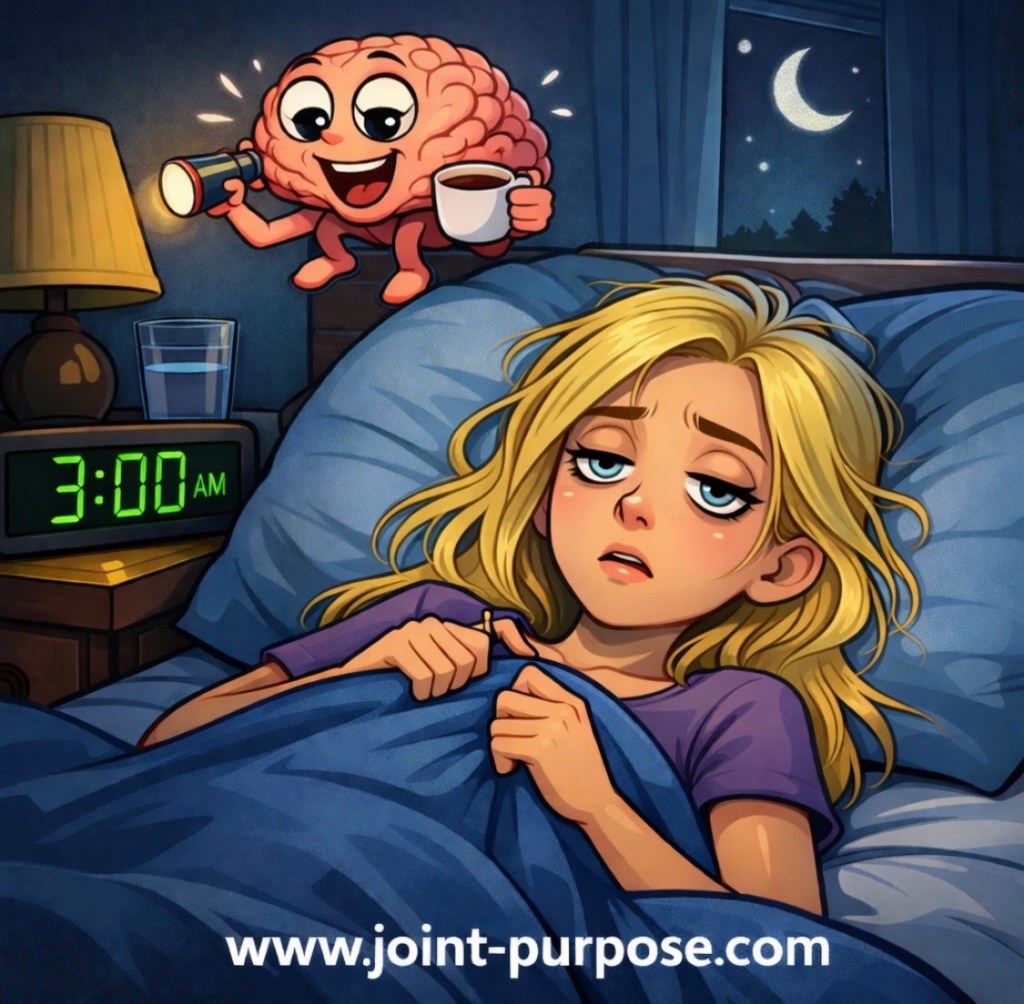
Have you ever woken up at 3 AM, stared at the ceiling, and wondered why your brain suddenly decided this was the perfect time to review your entire life story?
You know the routine.
You wake up.
You roll over.
You look at the clock.
3:02 AM.
Then your brain says,
“Well… since you’re awake, let’s think about that awkward thing you said in 1998.”
Sound familiar?
Before you panic and assume something is wrong with you, let’s talk about what’s actually happening.
Your body is not broken.
You probably don’t have insomnia.
And no, the universe is not punishing you for eating that extra cookie before bed.
In many cases, waking up around 3 AM happens during one of the deepest stages of your body’s recovery cycle. Your body temperature dips, your heart rate slows down, and your body is doing important overnight repair work.
Think of it like your body’s overnight maintenance crew clocking in.
But here’s the catch.
When your body is in such a deep repair stage, even a small disturbance can wake you up.
And suddenly you’re lying there wondering why you’re awake while the rest of the world seems peacefully asleep.
First, Let’s Be Honest — You’re Not Alone
If you wake up in the middle of the night a few times each week, you’re actually in very good company.
Many people experience these middle-of-the-night wake-ups.
The frustrating part is that once you wake up, your brain immediately turns into a calculator.
“How many hours of sleep do I have left?”
“If I fall asleep right now, I’ll get four hours.”
“If I don’t fall asleep soon, tomorrow is going to be terrible.”
Then you look at the clock again.
And that’s usually when the overthinking begins.
The more we stress about being awake, the harder it becomes to fall back asleep.
So the first thing to remember is simple:
Waking up during the night is actually very common.
The Clock Watching Trap
One of the worst things you can do is keep checking the clock.
3:04
3:12
3:19
Now your brain is running sleep calculations like it’s part of NASA’s mission control.
Instead of watching the clock, sometimes the best thing to do is get up for a few minutes and do something relaxing until you feel sleepy again.
This helps your brain keep the connection that the bed is for sleep — not for holding a midnight staff meeting about your life.
And Please… Put The Phone Down
We’ve all done it.
You wake up and think,
“I’ll just check my phone for a minute.”
Thirty minutes later you’re reading about something completely random that started with checking the weather.
The problem is the blue light from phones and laptops tells your brain that it’s daytime.
Once your brain thinks morning has arrived, it’s much harder to drift back to sleep.
So if you wake up in the middle of the night, try to resist the urge to grab your phone.
Your future, well-rested self will thank you.
Your Stress Hormones Might Be Involved
Around 3 AM, your body naturally begins increasing a hormone called cortisol.
Cortisol often gets blamed for stress, but it actually has an important job. It helps prepare your body to wake up in the morning.
Normally cortisol slowly rises so that by the time your alarm goes off, your body is ready for the day.
But if you’re dealing with stress, illness, chronic pain, anxiety, or just the normal pressures of life, cortisol can spike a little too much.
And when that happens, your brain might decide it’s time to wake up.
Even if you strongly disagree.
What You Ate Before Bed Can Matter
Sometimes the cause of your middle-of-the-night wake-up actually started earlier in the evening.
Large meals late at night can cause indigestion, heartburn, or acid reflux, especially when you lie down soon after eating.
When you’re lying flat, stomach acid can travel upward more easily, which can disturb sleep.
Eating late can also increase your metabolism and raise your body temperature.
And your body actually sleeps best when it’s slightly cooler.
Another factor can be blood sugar.
Meals high in sugar or simple carbohydrates can cause blood sugar to spike before bed and drop during the night, which can wake you up.
And of course there are the usual sleep disruptors:
Caffeine later in the day Alcohol before bedtime Nicotine Drinking a lot of water before bed
That last one often leads to the famous 3 AM bathroom trip.
Your Sleep Environment Matters Too
Sometimes the reason you’re awake at night has nothing to do with hormones or food.
It may simply be your sleep environment.
Things like:
Traffic outside Loud neighbors A room that’s too hot or too cold An uncomfortable mattress
The ideal sleeping temperature for most people is somewhere between 66 and 74 degrees.
Even moving to a new home or sleeping somewhere unfamiliar can affect sleep. Your brain stays slightly more alert in new environments.
It’s basically acting like a nighttime security guard.
Helpful in theory.
Annoying when you just want to sleep.
Let’s Talk About Pets
We love our pets.
They’re family.
But sometimes they’re also terrible sleep partners.
They stretch across the bed.
They move around.
They snore.
Some pets decide that 4 AM is breakfast time.
While sleeping with pets can be comforting, they can also wake you up without meaning to.
Sometimes giving them their own sleeping space can help everyone sleep better.
Hormones Can Play a Role
Hormonal changes can also affect sleep.
This includes things like:
Menstrual cycles Pregnancy Menopause
Hormones fluctuate during these times, which can make sleep lighter and easier to interrupt.
Sometimes your hormones simply decide 3 AM is a good time to wake up.
Even if you strongly disagree.
Stress Loves the 3 AM Time Slot
Stress is one of the biggest reasons people wake up during the night.
Your body reacts to stress the same way it would react to danger.
Unfortunately, your body cannot tell the difference between being chased by a lion and worrying about work deadlines, family concerns, finances, or health issues.
To your brain, stress is stress.
When stress levels rise, sleep becomes lighter and easier to interrupt.
And suddenly you’re lying there thinking about everything you need to do tomorrow.
Or next week.
Or five years from now.
My Own Early Morning Routine
I’ll admit something.
My own body clock has its own schedule.
For some reason, it loves 2 AM.
Many nights I find myself waking up around that time.
At first it used to frustrate me, but over time I’ve learned not to fight it so much.
Most mornings I’m up somewhere between 4:00 and 4:30 AM.
And instead of getting upset about it, I’ve started using that quiet time in a way that actually brings peace to my day.
I pray.
I read my Bible.
And I enjoy the quiet stillness before the world wakes up.
There’s something very calming about those early morning hours when everything is silent and the day hasn’t started rushing yet.
It becomes a moment to breathe, reflect, and prepare for the day ahead.
The Bottom Line
If you wake up at 3 AM once in a while, try not to panic.
It doesn’t necessarily mean something is wrong.
Often it simply means your body is moving through its natural sleep cycles while doing important repair work.
Stay calm.
Avoid the clock.
Put the phone down.
Relax for a few minutes if needed.
Your body may drift back to sleep once things settle down.
And if you do find yourself awake tonight staring at the ceiling, remember this:
Your body is probably just doing its overnight maintenance.
Unfortunately, your brain sometimes likes to hold a meeting at the exact same time.
 Joint Purpose
You must be logged in to post a comment.