

Why AI Should Never Make Life-Altering Insurance Decisions
And why humans still matter more than ever.
Artificial Intelligence is everywhere these days—writing content, generating ideas, organizing your calendar, helping students study, even recommending what you should watch on a Friday night. And honestly? AI can be a fantastic tool. It can streamline tasks, spark creativity, and make certain jobs more efficient.
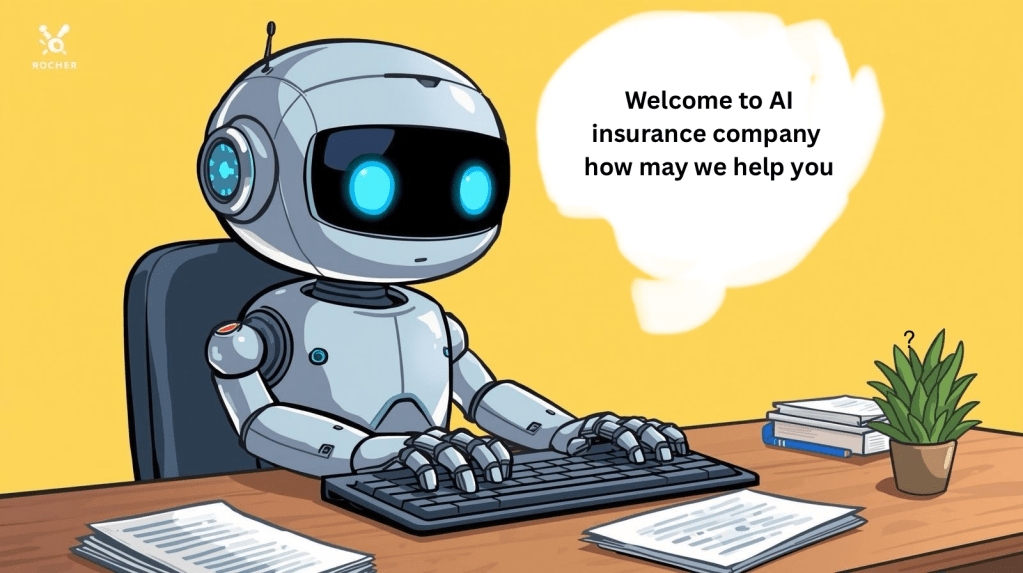
But somewhere along the way, a few companies got bold—too bold—deciding that AI should also be the one determining things like whether your car insurance claim gets approved… or whether your health insurance will cover the treatment you need… or whether your rates will skyrocket because an algorithm “thinks” you’re a risk.
Let’s call this what it is:
Ridiculous. Dangerous. And incredibly out of touch with real human lives.
AI is a Tool, Not a Judge
AI can analyze data quickly, recognize patterns, and assist with processing large amounts of information—but it cannot understand the context of a person’s life. It doesn’t know that you lost your job, or that your doctor made a mistake, or that your car accident wasn’t your fault because a deer decided to commit a surprise attack at 6 a.m.
AI does not have empathy.
AI does not have lived experience.
AI does not understand nuance.
And yet some companies want to let algorithms make decisions that directly impact a family’s ability to pay bills, access healthcare, or get back on the road after an accident.
That is not innovation.
That is irresponsibility dressed up as efficiency.
Life-Altering Decisions Require Real Humans
Insurance decisions aren’t like choosing your next song on Spotify. They affect your finances, your well-being, your medical care, your future, and sometimes even your survival.
A human being can ask questions.
A human being can look deeper.
A human being can understand compassion, circumstance, and fairness.
AI cannot—and should not—replace that.
When a computer denies your claim, you can’t explain your side of the story to it. You can’t ask it to reconsider. And worst of all, there is no accountability because “the algorithm said so” is becoming a convenient excuse for real human responsibility disappearing.
The Slippery Slope: Replacing Workers With Machines
Let’s be honest—part of the push for AI in insurance is simply profit. Fewer employees, fewer salaries, more automation.
But here’s the truth:
Insurance is built on human interaction.
People need real people to talk to when something goes wrong.
Nobody wants to sit on the phone listening to a robot recite policy numbers when their car has been totaled or their child needs emergency surgery. These are moments that require human understanding, human reassurance, and human problem-solving.
AI can assist, but it cannot replace the people who work in these industries. And it absolutely should not be making the final call.
AI Should Support—Not Replace—Human Judgment
If AI is used at all in insurance, it should be used only in ways that:
Help workers, not replace them Process paperwork faster, not deny claims Improve accuracy, not eliminate compassion Assist with data, not take over decisions
Think of AI as a calculator, not a CEO. A helper, not a judge. A tool, not the one in charge.
We Need Ethical Boundaries—Not Tech Experiments on Real People
AI is powerful, but power without boundaries is dangerous. Insurance is too important, too sensitive, and too deeply connected to people’s lives to hand over to an algorithm that cannot think, feel, or care.
At the end of the day, technology should improve human life—not make it colder, harder, or more confusing.
Until AI can understand what it feels like to be scared, stressed, injured, or overwhelmed—which it never will—it has no place making life-changing decisions for the rest of us.
Final Thought: Humanity Isn’t Optional
AI can be helpful. Creative. Efficient. Even impressive.
But when it comes to insurance decisions?
Humans must always remain in charge.
Because empathy is not programmable.
Compassion cannot be automated.
And fairness requires a human heart.
 Joint Purpose
You must be logged in to post a comment.